Rules and method

Big Small Game Kaise Khele — The Rules, Then the Method

Play Big Small

The rules take a minute. The method — deciding your stake and your stopping point before the timer starts — is the part that separates a session you can explain from one you cannot. Both are below, in that order.

  • Rules 4
  • Round length 1–5 min
  • Things you control 2
  • Things you predict 0
The rules

Everything the Game Actually Does

Four rules. There is no fifth, no hidden mechanic and no system underneath waiting to be discovered.

A number appears on a timer

Usually 0 to 9, generated on the operator's server when the round closes. Five to nine is big, zero to four is small, unless the build documents a different split.

You bet before the lock

Choose a side, set a stake, confirm. Betting closes a few seconds before the draw and nothing can be changed, hedged or cancelled after that point.

A win pays under 2x

Around 1.95 times the stake in most builds. That shortfall against a true even-money return is the operator's edge, and it is charged on every round you play.

Rounds are independent

The next number knows nothing about the last one. No streak is due to end, no side is warm, and the history strip contains no information about what comes next.

First round

Big Small Game Kaise Khele, Step by Step

Do this in a demo where one exists. The sequence is identical with money, which is exactly why it should be automatic by then.

  • 01

    Read the payout before anything else

    Find the figure a winning call returns and write it down. Everything about whether a session is worth playing follows from that number, and a build that does not publish it has told you something.

  • 02

    Choose the stake away from the timer

    Pick the amount before a round is running, not while a countdown is on screen. A stake that would sting if lost five times in a row is the wrong stake — and five losses in a row is an ordinary occurrence, not bad luck.

  • 03

    Decide how many rounds you will play

    Not how much you want to win — how many rounds. Twenty is a session. Writing the number down converts a vague intention into something you can actually notice yourself breaking.

  • 04

    Place the bet early in the window

    Not in the last two seconds. Late bets are where connection problems turn into stakes you did not intend, and there is no advantage whatever to betting late.

  • 05

    Stop at the number you chose

    Mid-streak, mid-recovery, mid-anything. The plan was made by a calmer version of you, and the entire value of having one is that it survives the moment when you would rather it did not.

Skill and its absence

Two Things You Control, and Everything You Do Not

Being precise about this line is the difference between playing and being played.

Yours

Genuinely under your control

  • How much you stake on each round
  • How many rounds you play before stopping
  • Which operator and which build you use
  • Whether you play at all today
VS
Not yours

Outside your influence entirely

  • Which number the server generates
  • Whether a streak continues or breaks
  • The payout multiplier and the edge inside it
  • Anything a chart, trick or signal group claims to know
Avoid these

The Three Mistakes That End Most Sessions

Not exotic errors — these three account for the overwhelming majority of sessions that finish worse than they started.

Doubling after a loss

Martingale feels like a system because it wins small amounts repeatedly and loses everything rarely. The rare event is not rare enough: eight losses in a row happen regularly at these round speeds, and the table limit exists precisely to make sure the sequence cannot be completed.

Betting against a streak

Ten smalls in a row does not make big due. Each round is generated independently, so the sequence carries no information — and the history strip is displayed prominently in almost every build because this particular mistake is profitable to encourage.

Playing past the number you set

Usually justified as recovering a loss or riding a good run. Both are the same decision, made by the version of you who is currently watching a timer. If it happens repeatedly, the honest fix is a shorter session rather than a better plan.

Round Length and Why It Matters More Than It Looks

A one-minute timer produces sixty rounds an hour. At fifty rupees a round that is three thousand rupees of turnover, and the operator's edge applies to all of it regardless of how the individual calls went. Slower rounds — three or five minutes — are not more generous, but they halve or fifth the volume, and volume is what converts a small statistical edge into a real amount of money.

Which is why the most practical advice available here has nothing to do with predicting anything: play the slowest round type the build offers, at the smallest stake you find interesting, for a number of rounds you decided in advance. That combination does not beat the edge. It simply stops you handing it more turnover than you meant to.

Kaise Download Karen, and Why That Is the Wrong First Question

Most people search for the download before they know how a round is settled, which means the first real decision they make is which file to trust rather than whether to play at all. Reversing that order costs nothing: watch a few rounds in a browser, read the payout figure, run a practice session where one exists, and only then decide whether an installed copy is worth the permissions it asks for.

For the format's history and the arithmetic behind the payout, see the big small game guide. For what practice mode can and cannot teach you before real money is involved, read the demo notes.
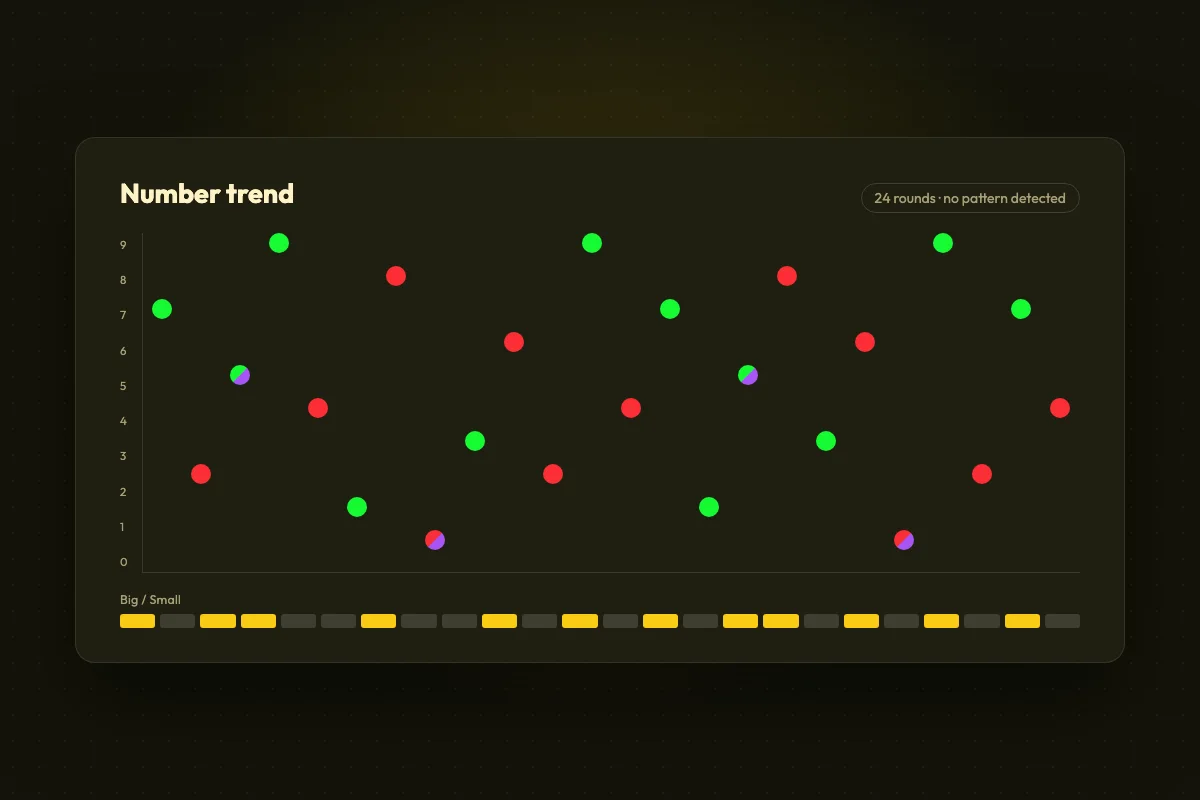
Number trend chart plotting the drawn digit across twenty-four consecutive rounds with no repeating pattern
FAQ

How to Play FAQ

Six questions from people about to place a first bet.

Pick big or small, set a stake, confirm before the timer locks, and wait for the number. Decide the stake and the number of rounds before you start, because those two choices are the only ones that remain yours once betting begins.

Neither. Both cover five of ten numbers and both pay the same reduced multiplier. Any preference between them is superstition, and any site claiming one is currently favourable is describing noise.

No. Rounds are independent, so previous results carry no information about the next one. The history panel is useful for reviewing how you played and actively harmful as a basis for deciding what to play next.

The smallest the build allows, held constant for the whole session. Multiply it by twenty to see the real price of an evening — that total is the number worth thinking about, not the per-round figure that always looks harmless.

No. It converts many small wins into one large loss, and the table limit guarantees the sequence cannot be extended indefinitely. What it does reliably do is put far more money at risk than the player intended when the session started.

Where the operator offers a practice mode, yes, and it runs the same rounds on credits with no cash value. Where none exists, watching live rounds settle without betting still teaches you the timer and the payout for nothing.

This website is for informational purposes only and is not a gambling operator: we do not accept bets or payments. 18+. Gambling involves risk and may lead to addiction — please gamble responsibly. Information (bonuses/terms/licenses) may change: check current rules on the operator’s website. We are not responsible for decisions and financial losses related to the use of third-party services.