Systems tested

Big Small Tricks, Charts and Prediction Systems, Examined

Play Big Small

Trick pdfs, result charts, streak counters and signal groups are the largest industry around this format. Each claims a different insight; all of them depend on the same assumption, and the assumption is wrong in a way that can be checked in an afternoon.

  • Systems examined 5
  • That change the odds 0
  • Rounds are independent yes
  • Things that do help 2
The claims

Five Systems and What Each One Assumes

Stated plainly, most of them stop being persuasive immediately.

  • 01

    Follow the streak

    Assumes a run of one side indicates something about the next round. It does not: the generator has no memory, and a sequence of five smalls is exactly as likely to be followed by small as by big.

  • 02

    Bet against the streak

    The same assumption in reverse — that the sides must balance soon. They balance over enormous samples, not over the next round, and nothing is owed to a player who arrived recently.

  • 03

    The chart or pdf method

    Assumes past results, arranged well enough, reveal structure. They are a record of independent events. Arranging them into a grid produces patterns the way clouds produce shapes.

  • 04

    Martingale and progressions

    The only system here that is internally coherent — and it fails on a practical limit rather than a logical one. Doubling requires an unbounded bankroll and a table with no maximum, and neither exists.

  • 05

    Paid signals

    Assumes somebody has access you do not. Nobody selling calls in a group chat has access to a result produced after betting closes on servers they do not own.

The arithmetic

Why Every System Lands in the Same Place

A fixed edge applied to turnover produces a predictable cost. Betting patterns change the shape of the ride, never the destination.

50%of numbers covered by an even-money call
~1.95xwhat a correct call typically returns
~5%of every stake retained by the operator
1 in 256chance of eight straight losses — routine at 60 rounds an hour

The doubling trap in one line

Starting at ₹10 and doubling, the eighth bet in a losing run is ₹1,280 and the run has already cost ₹1,270 — to win ₹10. Eight losses in a row happen roughly once every 256 rounds, which is about four hours of one-minute play.

Signal groups

How a Prediction Group Stays Convincing

No forgery required. The structure does the work.

What you see

Inside the group

  • Screenshots of winning calls, posted by members
  • A visible run of correct predictions
  • Confident language and a subscription tier
VS
What produces it

The mechanism

  • Half of all calls are right by arithmetic alone
  • Only winners post screenshots; losers go quiet
  • Some groups split the audience and send opposite calls
  • Revenue comes from subscriptions and referrals, not results
Honest answer

The Two Things That Genuinely Change Outcomes

Neither is a prediction, and both are boring enough that nobody sells them.

Turnover — how much passes through the game

The edge is charged on volume, so a smaller stake and a slower round type reduce the cost of an hour in direct proportion. Moving from a one-minute to a five-minute round cuts your hourly exposure by four fifths without changing anything about how you play.

Session length — how long you stay

Decided in advance and written down, or decided in the moment by someone watching a countdown. Those two produce very different evenings, and it is the only decision in this game where preparation reliably beats improvisation.

What about picking the right side?

There is no right side. Both cover half the range and pay the same. Any effort spent choosing between them is effort not spent on the two decisions above, which are the ones that actually move the number at the end of the session.

Test Any System in an Afternoon

You do not have to take this page's word for it, and you should not. Take whichever system interests you, write down its rules precisely enough that another person could follow them, and apply it to a hundred rounds in a practice mode — logging every result as it happens rather than reconstructing afterwards. Then apply a fixed stake with a fixed call to another hundred rounds and compare the totals.

Two things usually happen. The totals land close together, both slightly below break-even, which is the edge appearing in a sample large enough to see. And the system turns out to require judgement calls at the exact moments where it matters — which is how a method survives contact with evidence: by being flexible enough never to be wrong.

Why the Trick Market Is So Large

Because it sells to people at their least sceptical. A player who has just lost a session is the ideal customer for a product promising the missing piece, and the channels where losses get discussed are exactly where these products recruit. The pdfs and charts cost nothing to reproduce, need no infrastructure, and can be sold indefinitely to an audience that renews itself with every bad evening.

For the mechanic underneath all of this, see the big small game guide. For the mod files and predictor apps that sit alongside the chart-based systems, read the hack claims page.
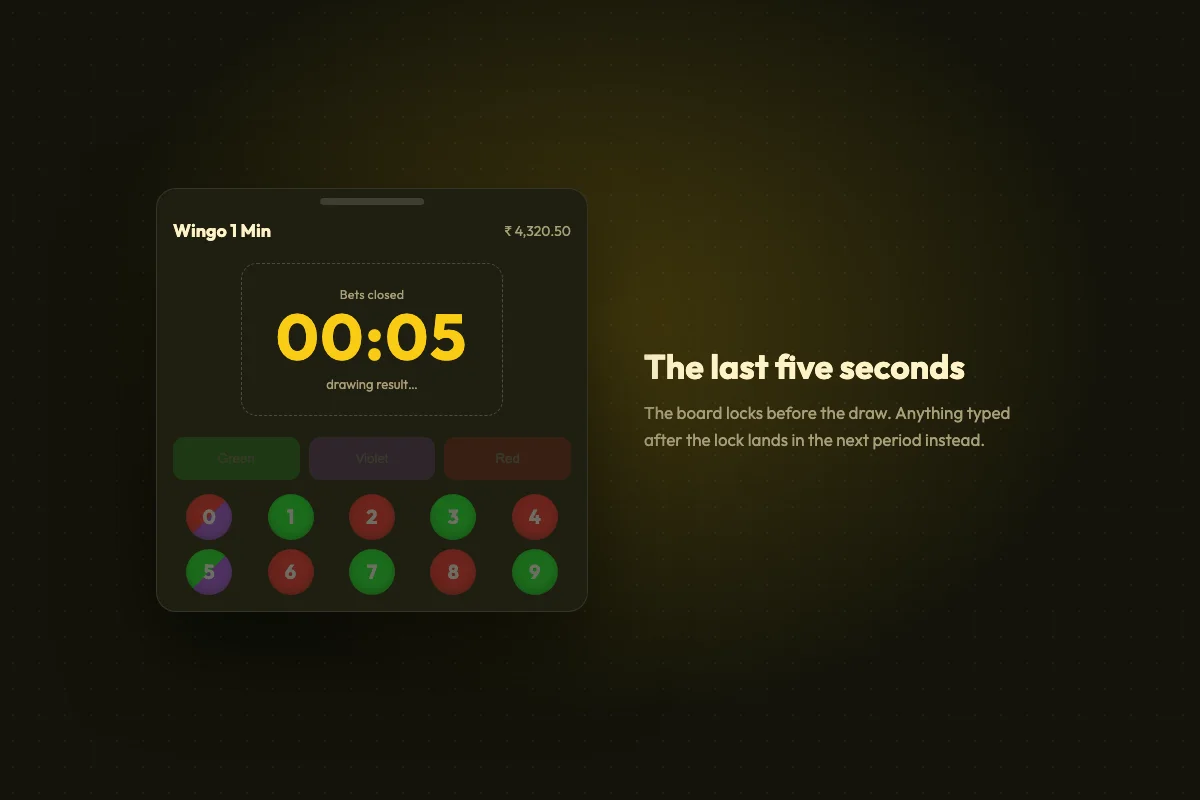
Game board locked five seconds before the draw, with the colour buttons greyed out
FAQ

Tricks and Prediction FAQ

Six questions about systems, charts and the people selling them.

Not in the sense of improving your chances. Rounds are independent and the payout is fixed, so no betting pattern changes the expected result. Patterns change how the losses are distributed, which is not the same thing as reducing them.

As documents about how people think about randomness, occasionally. As betting instructions, no. They arrange past independent results into grids and describe the shapes that appear, which is a description of noise rather than a method.

It is the only one that is internally consistent, and it fails on practical limits. Doubling needs an unlimited bankroll and a table with no maximum. Both constraints are real, and the eighth loss in a run arrives far more often than people expect.

Five correct calls in a row happens by chance about once in thirty-two attempts. In a group of a thousand people making calls, several will achieve it every hour, and those are the ones who post screenshots. Nobody posts the other outcome.

Yes, and it is the most useful hour you can spend here. Write the rules down precisely, apply them to a hundred practice rounds, log every result as it happens, and compare against a hundred rounds of flat betting. The comparison is the answer.

Two things do, and neither is a prediction: reducing turnover — smaller stakes, slower rounds — and deciding session length before you start. They do not beat the edge, they limit how much of your money the edge is applied to.

This website is for informational purposes only and is not a gambling operator: we do not accept bets or payments. 18+. Gambling involves risk and may lead to addiction — please gamble responsibly. Information (bonuses/terms/licenses) may change: check current rules on the operator’s website. We are not responsible for decisions and financial losses related to the use of third-party services.