Verification

Big Small Game Real or Fake — How to Check the Build You Have

Play Big Small

The question bundles two different things. The mechanic is real and works exactly as described. The copies are the problem — and they are numerous enough that "is it real" is best replaced with "is this one real", which is a question you can answer yourself in ten minutes.

  • Mechanic real
  • Copies circulating many
  • Checks 6
  • Time needed ~10 min

The rounds are genuine: a number is generated, a side wins, the payout arrives. There is nothing mysterious in the mechanic and it is not, in itself, a fraud — it is a stake-based product with an operator edge, which is a different thing from a scam.

The fakes are the layer around it. Repackaged clients with reduced payouts, sites that exist to collect registrations, apps requesting permissions no game needs, and operators who take deposits smoothly and pay out slowly. Each of those is checkable, and none of them require you to trust a review.

Method

Six Checks, Fastest First

The first three take a minute between them and eliminate most bad builds.

  • 01

    Can you see rounds before registering?

    Round types, the timer and results should be visible without an account. A registration wall in front of everything means the site's product is your contact details rather than the game.

  • 02

    Is the payout printed?

    The multiplier on a winning call should be stated somewhere. A build that never publishes it is withholding the one figure that determines what an hour costs, and that omission is cheap to fix when the number is honest.

  • 03

    Where did the build come from?

    A listing with a publisher, a site you found yourself, or a file somebody forwarded. The third category is where nearly every edited client originates, and provenance costs nothing to check.

  • 04

    Does the payout match a reference build?

    Compare against a build you already trust, same round type, same bet. A lower multiplier for the same call is conclusive: the client was edited, and playing carefully will not recover the difference.

  • 05

    What permissions does it want?

    Network and storage are expected. SMS, contacts and accessibility access are not, and no explanation offered for them changes what they enable.

  • 06

    Does a small withdrawal complete?

    The final and most informative test. Deposit the minimum, play briefly, withdraw. Whatever happens next is the most reliable evidence about that operator you will ever obtain.

How copies operate

Three Business Models Behind a Fake Build

Knowing what a copy is trying to obtain makes it far easier to recognise.

The trimmed payout

The game works and looks correct, and a winning call pays slightly less than the original. Invisible without comparison, profitable at scale, and by far the most common edit.

The registration harvester

The game is a facade in front of a form. What it wants is an email address, a phone number and a password you have used somewhere that matters.

The permission grab

An installed package requesting SMS or accessibility access. The rounds are irrelevant here — the payload is the ability to read your screen and your messages.

And a fourth that is not a copy at all

An operator running a genuine build that simply does not pay out reliably. Nothing about the client is edited; the problem is the company behind it, which is why the small-withdrawal test matters more than any technical check.

Problem and answer

If You Are Not Sure

Three positions people write in from, and what each should do next.

"It looks fine but something feels off"

Usually a payout that differs slightly from what you are used to, noticed as a feeling before it is noticed as a number. Stop and compare the multiplier against a build you trust — the check takes two minutes and instincts here are surprisingly reliable.

"I won but cannot withdraw"

Check verification status, the withdrawal minimum and whether a bonus attached wagering conditions — in that order of likelihood. If all three are clear and the payment still does not move, stop depositing and escalate through the operator's published channel.

"I granted permissions I should not have"

Revoke them, uninstall, and change the passwords of anything you logged into afterwards — from a different device if accessibility access was granted. Then turn the unknown-sources setting back off and leave it off.

Why "Real or Fake" Is the Wrong Question

It bundles two separate things: whether the game does what it says, and whether a stake-based product is a good idea. The first has a clear answer — the mechanic works, results settle, payouts arrive. The second is a personal judgement about spending money on short, high-variance entertainment with a built-in edge, and no amount of verification changes it. A build can be entirely genuine and still be a poor way to spend an evening.

Separating them makes both easier. Verify the build with the checks above, then decide about the game on its own merits rather than on a rumour that it is rigged or a promise that it pays.

What Convinces Us a Build Is Genuine

Four things together, none sufficient alone. Rounds visible before registration. A payout figure published and matching other builds. A publisher or company identifiable somewhere that is not the site's own marketing copy. And a completed withdrawal at a small amount. A build with all four has earned the benefit of the doubt; one missing two or more has not, however professional the interface looks.

For the mechanics behind these checks, see the big small game guide. For the tools that claim to beat the format rather than merely copy it, read the hack claims page.
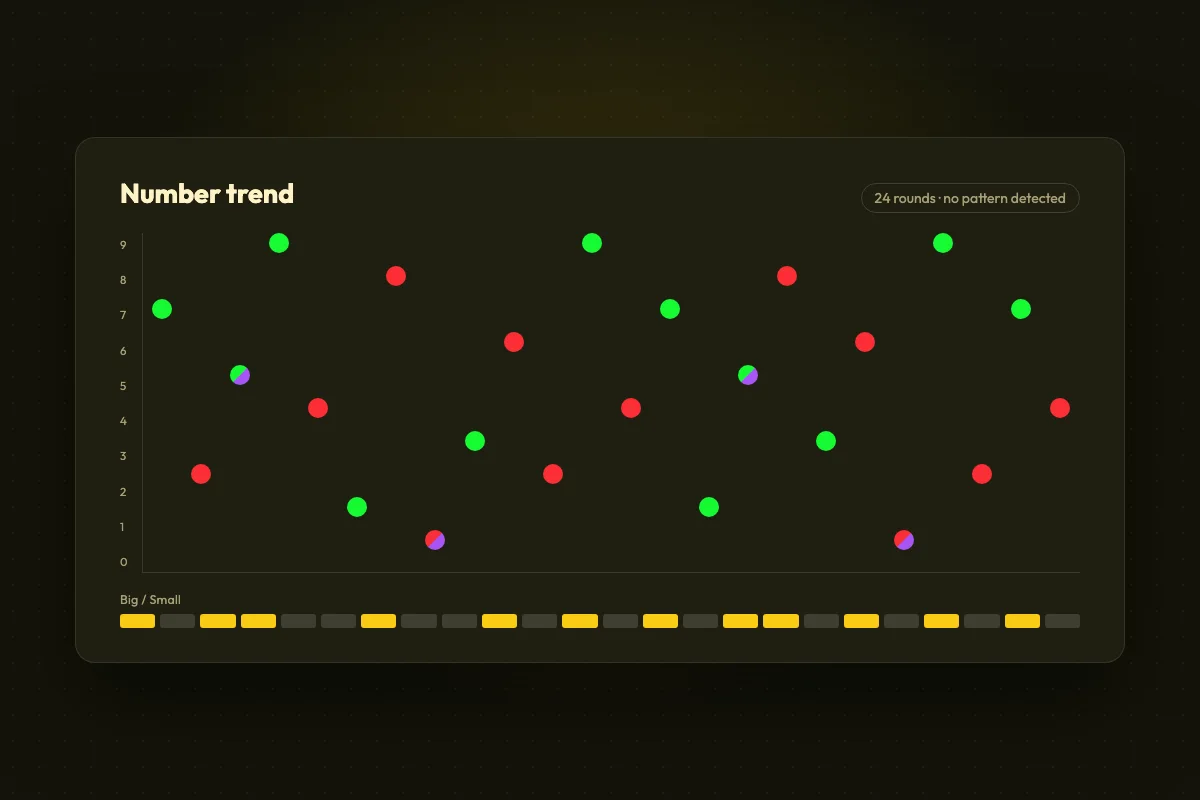
Number trend chart plotting the drawn digit across twenty-four consecutive rounds with no repeating pattern
FAQ

Real or Fake FAQ

Six questions about telling a genuine build from a copy.

The mechanic is real — rounds are generated, results settle and payouts arrive. The fakes are repackaged clients with reduced payouts and sites built to collect registrations. Judge the specific build in front of you rather than the format as a category.

See whether you can watch a round before registering, and whether the payout figure is printed. A site that hides both is not offering a game first. That single look removes most bad builds in under a minute.

Yes, and most do — artwork is the cheapest part to copy, which makes appearance worthless as evidence. What copies cannot easily fake is a payout matching other builds and a publisher record that predates the format's popularity.

Losing streaks are ordinary in an even-money bet — five in a row happens roughly twice an hour at sixty rounds. What is worth checking is not the streak but the payout figure, because a trimmed multiplier costs you steadily whether you are winning or losing.

Not by itself. Incomplete verification, a balance below the minimum and an accepted bonus with wagering conditions all block withdrawals at legitimate operators. Check those three first — and if none apply and the payment still does not move, stop depositing.

In a browser, largely yes — nothing is installed and nothing is submitted. Risk in this category concentrates in two places: files you install and forms you complete. Watching a round in a tab involves neither.

This website is for informational purposes only and is not a gambling operator: we do not accept bets or payments. 18+. Gambling involves risk and may lead to addiction — please gamble responsibly. Information (bonuses/terms/licenses) may change: check current rules on the operator’s website. We are not responsible for decisions and financial losses related to the use of third-party services.